
Loading...
Serving Santa Barbara, CA and surrounding areas. (820) 223-1472
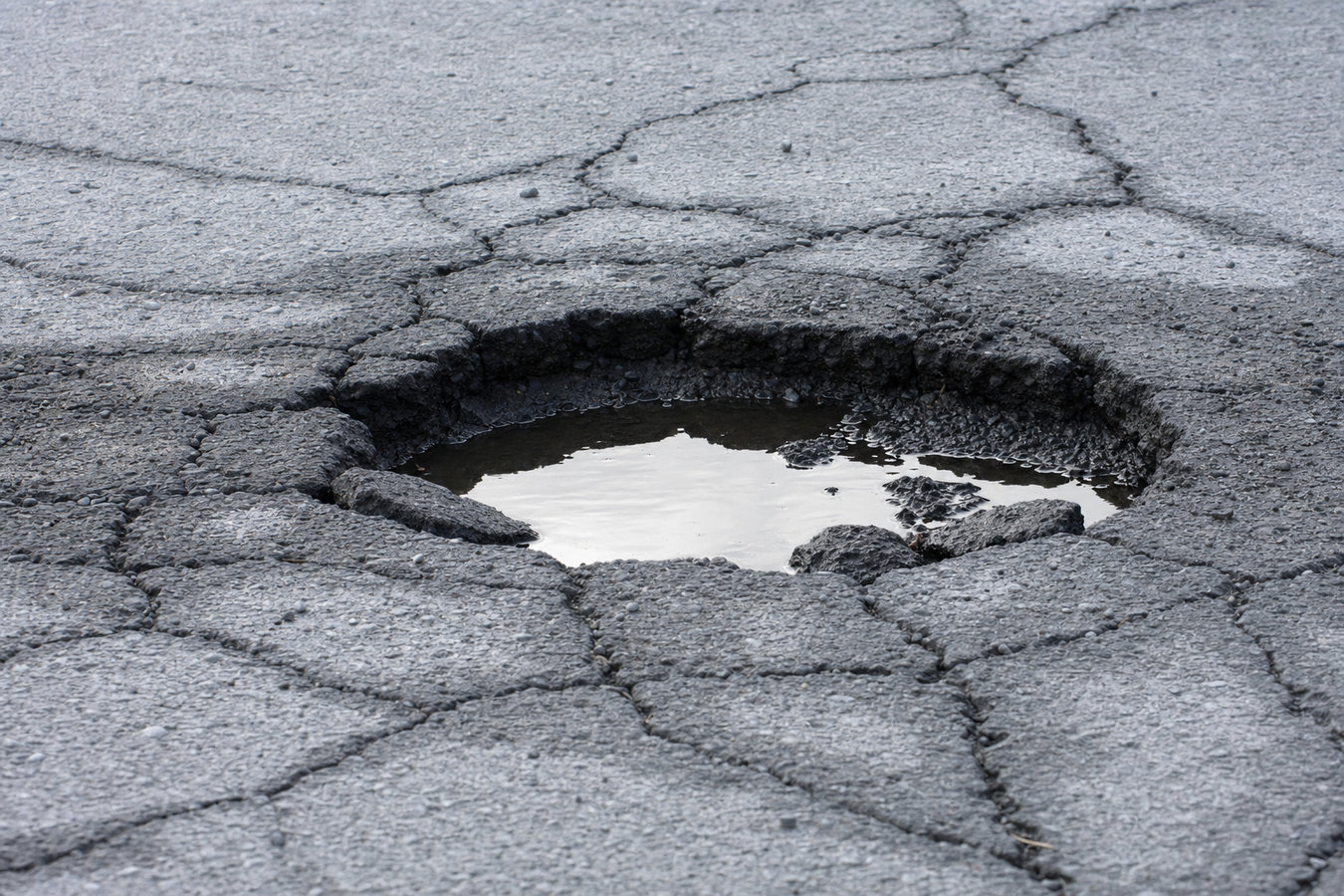
A jagged pothole keeps growing with every rainy season. We cut back to solid asphalt, fill with hot-mix, and compact it right the first time.
Pothole repair in Santa Barbara means cutting the damaged area back to solid, stable asphalt on all sides, cleaning out debris, filling with fresh hot-mix asphalt, and compacting it firmly so it sits flush with the surrounding surface. Most residential jobs are done in a few hours, and you can drive on the patch within an hour or two of completion.
Santa Barbara potholes form differently than they do in colder climates. There are no freeze-thaw cycles here. Instead, long dry summers oxidize and crack the pavement surface, then the concentrated winter rainy season drives water into those cracks, softens the ground underneath, and traffic pressure causes the surface to collapse. That cycle repeats every year if the damage is not addressed. If your driveway has visible holes or depressions, a proper pothole repair now prevents the kind of widespread base failure that makes asphalt repair or even full replacement necessary.
The difference between a repair that lasts and one that fails within months is preparation. Cutting back to solid edges, addressing the base, and proper compaction are what make the patch hold. We do not skip those steps.
A clear bowl-shaped break in the asphalt - especially one that collects water after rain - is a pothole that needs professional repair. Leaving it open lets water keep working into the base, and the hole will grow larger with every wet season.
If the same low spot fills up every time it rains, the base beneath that area has likely settled or eroded. Santa Barbara's concentrated winter rains make standing water easy to spot, and that pooling water actively worsens the damage each season.
When broken asphalt leaves a jagged edge, it is a safety hazard for vehicles, bikes, and anyone walking across the surface. In Santa Barbara, where outdoor foot traffic around driveways is common year-round, this is worth fixing promptly.
Asphalt that cracked during a previous rainy season and was left untreated often opens further as the dry summer causes the pavement to contract. If cracks you noticed last year are now wider, or if the edges have started to crumble, the damage is progressing.
Every pothole repair starts the same way: we assess not just the visible hole but the pavement around it and the condition of the base underneath. On hillside Santa Barbara driveways, we also look at how water drains across the area, because drainage direction is part of what determines whether a repair holds. For isolated damage on structurally sound pavement, a saw-cut patch with hot-mix asphalt is almost always the right approach. We also offer grading and excavation for driveways where the base itself has failed and needs to be rebuilt from the ground up.
Once a patch has cured, we can apply a sealcoat over the repaired area and the surrounding pavement to lock out water and protect against the UV exposure that Santa Barbara's long summers bring. That combination - a proper patch followed by asphalt repair and sealing - is the most cost-effective way to extend the life of an aging driveway without committing to full replacement.
Best for isolated potholes on a driveway or parking area where the surrounding pavement is still structurally sound.
Right for driveways where the base has shifted or eroded - common on Santa Barbara hillside lots with clay soils - and patching the surface alone would not hold.
Suited for parking areas or driveways with several damaged zones that can all be addressed in one visit to save mobilization cost.
For homeowners who want to protect the repair and the surrounding pavement from UV damage and water infiltration before the rainy season.
Santa Barbara potholes are a product of the local climate. The long, dry summers allow UV exposure to oxidize and dry out the asphalt binder, making the surface brittle and prone to surface cracks. Then the concentrated winter rainy season - typically November through March - drives water into those cracks, softens the ground underneath, and the combination of water and traffic pressure causes the surface to collapse. This cycle is especially pronounced on hillside lots, where water moving quickly downhill concentrates at low points and along edges, accelerating erosion of the base material. Montecito, CA homeowners with elevated or terraced driveways see this pattern regularly, and a repair that does not account for drainage direction will fail again before the next winter ends.
Parts of the Santa Barbara area also sit on clay-heavy soils that swell when wet and shrink when dry. That seasonal movement shifts the base beneath driveways, opening cracks and creating voids that eventually become potholes. Filling a hole over an unstable base leads to a repair that fails quickly - which is why we assess the base condition before patching, not after. Properties in Carpinteria, CA and other foothill communities share these soil conditions, and a contractor familiar with local geology will approach those repairs differently than someone used to more stable sandy ground.
Describe the damage - location, rough size, and how long it has been there. We respond within one business day and schedule a free on-site visit to assess the damage in person before giving you a written estimate.
We check the visible hole, the surrounding pavement, and the base condition. On hillside Santa Barbara driveways, we also review drainage direction. You get a clear written quote before any work begins - no surprises on the invoice.
We saw-cut the repair area back to solid, stable asphalt on all sides - typically in a clean rectangle. Loose material and debris are removed and the area is swept clean before any new material goes in.
Hot-mix asphalt is placed in layers and compacted with a plate compactor until it sits flush with the surrounding surface. We do a final check to confirm the patch is level and the edges are tight, then tell you when you can drive on it.
Free on-site estimate, written quote, no obligation. We respond within one business day.
(820) 223-1472We saw-cut every repair area back to solid, stable pavement before filling - the step most quick-fix contractors skip. That edge preparation is what determines whether a patch holds through multiple rainy seasons or fails within months.
Sloped driveways and expansive clay soils are common across Santa Barbara and the surrounding communities. We account for drainage direction and base stability on every hillside repair, so the patch does not become a new low spot that collects water. NAPA best practices guide our approach to base assessment and compaction.
California requires paving contractors to hold a state-issued license before working on your property. You can verify any contractor's status through the CSLB. Hiring licensed means you have recourse if something goes wrong.
You receive a written scope of work and price before any crew arrives. We do not adjust the price after the job starts unless the scope changes - and if it does, we tell you first. No invoice surprises at the end.
Every repair we complete is built on the same foundation: proper preparation, the right materials, and workmanship that holds up through Santa Barbara's seasonal extremes. When you call us, you get a patch you can trust - not one you will be watching anxiously when the first winter storm arrives.
When the base beneath your driveway has failed, grading and excavation rebuilds it from the ground up before any paving begins.
Learn MoreBroader asphalt repair services covering cracks, surface deterioration, and structural damage beyond isolated potholes.
Learn MoreSanta Barbara's wet season waits for no one - call today to lock in your repair date and protect your driveway all winter.